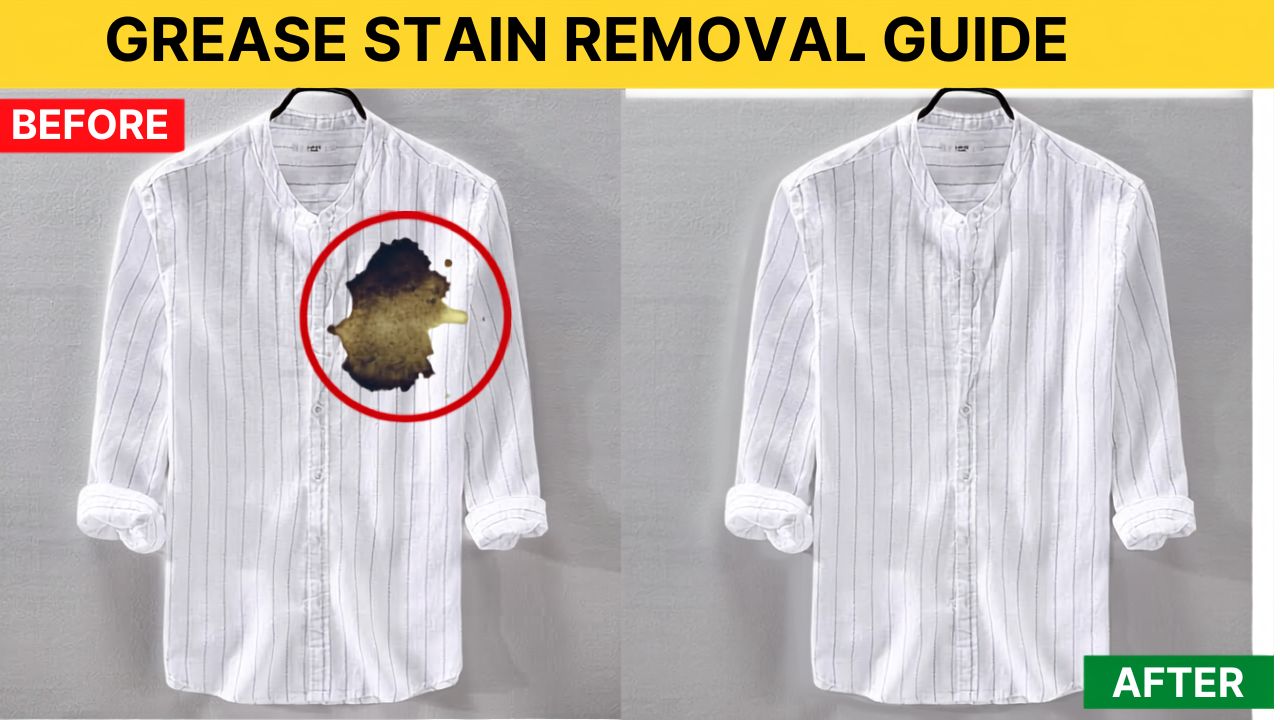
Grease stains can cling to clothes much more stubbornly than most people expect because oil seeps deep into fabric fibers. From my experience, the biggest mistake is waiting too long after a grease spill. The sooner you start grease stain removal, the better your chances to remove grease stains from clothes without causing clothing damage. Begin with a gentle stain treatment, apply fabric-safe cleaning methods, and wash according to the garment’s care label. Whether you’re dealing with old grease stains, oil stains, or fresh stubborn stains, choosing the right laundry solution helps restore both white clothes and colored clothes while protecting fabric durability. Good stain removal isn’t just about appearance, it’s an essential part of clothing care, garment care, fabric protection, and long-term textile care.
For everyday laundry, I prefer starting with simple grease removal techniques before considering dry cleaning. Once the stain is gone, avoid ironing until you’re sure no residue remains, as heat can permanently set the stain. Regular fabric cleaning, proper garment cleaning, and consistent laundry care keep every outfit looking fresh and extend its lifespan through better clothing maintenance. If a stain refuses to come out, a professional laundry service or trusted cleaning service can often save the garment, especially when they offer convenient washing service, pickup service, delivery service, or even 24-hour delivery for urgent needs. The goal is always the same: effective stain cleaning that leaves you with clean clothes and a clean outfit without compromising the quality of the fabric.
What’s the Best Way to Remove Grease Stains from Clothes?
The best way to remove grease stains from clothes is to place cardboard behind the garment for stain protection, apply Dawn dish soap or another dish soap as a pretreatment, sprinkle baking soda, use an old toothbrush for gentle scrubbing, let it soak for 15–30 minutes, then complete grease removal with washing at the hottest water setting allowed by the fabric-safe water temperature. This approach delivers reliable stain removal while protecting the fabric, supporting better laundry care and long-term clothing care.
Why Are Grease Stains So Difficult to Remove?
Grease stains are challenging because oil and grease are hydrophobic, non-polar, and naturally water-repellent, so water and many water-based detergents struggle to lift them from microscopic fabric fibers. In my experience, oil penetration, grease absorption, and fiber bonding become even harder to reverse after oxidation or exposure to dryer heat, where heat setting creates baked-in stains that require stronger laundry detergent, targeted grease removal, careful stain removal, and proper fabric care to avoid leaving behind stubborn stains.
What to Do Immediately After Getting a Grease Stain
A fresh grease stain is much easier to treat than one that has had time to settle into the fabric, so quick action is essential. As soon as you notice grease stains on your clothes or outfits, use a clean towel to gently blot the area and absorb excess grease instead of rubbing it. This simple step helps prevent stain spread and reduces the risk of fabric damage. Follow with immediate treatment using an appropriate pretreatment, then continue with proven cleaning techniques, stain removal methods, and grease stain removal to remove grease stains from clothes while supporting good clothing care, fabric care, grease removal, laundry care, and other effective strategies. Always finish by following the garment’s cleaning instructions.
Act Fast to Prevent the Stain from Setting
For the best results, apply a quality stain remover or grease stain remover as a pretreatment before washing. I have found that an enzyme-based stain remover containing enzymes, especially lipase, works exceptionally well because this grease-removing enzyme speeds up grease breakdown in grease stains on clothes and many oil stains. Check the enzyme label on your cleaning products or laundry products, then wash with a laundry detergent that contains detergent enzymes or other stain-fighting enzymes. A strong enzyme formula combined with the right cleaning solution improves stain treatment, grease cleaning, grease removal, and overall stain removal without sacrificing fabric care or clothing care.
Do’s and Don’ts After a Grease Spill
Do blot the stain immediately, read the garment label or care label, and follow all cleaning instructions before choosing a dish soap, laundry detergent, or eco-friendly laundry detergent for stain treatment and grease removal. Don’t use rubbing to attack grease stains, as it often causes stain spreading and can affect the fabric texture of delicate garments and outfits. Avoid harsh chemicals and direct heat, since heat damage can lock in many common stains and make grease stain removal much harder. Acting quickly is the best form of fabric protection, supports long-term clothing care, fabric care, and laundry care, and helps remove grease stains from clothes more effectively through immediate action.
Things You’ll Need to Remove Grease Stains
Before you begin grease stain removal, gather the right cleaning agent or cleaning agents, a quality laundry detergent or detergent, and a suitable cleaning solution designed for effective stain treatment and grease removal. Always check the clothing label, care label, label instructions, cleaning instructions, and washing instructions to match the suitable detergent and proper detergent selection with the fabric type. Choosing the correct products for your fabric and clothing makes it much easier to remove grease stains from clothes while protecting fabric care, textile care, garment care, and overall laundry care throughout the stain removal process.
| Item | Purpose |
| Liquid dish soap | Breaks down grease and oil |
| Laundry detergent | Removes grease during washing |
| Commercial stain remover | Treats stubborn or set-in stains |
| Baking soda or cornstarch | Absorbs excess grease |
| Soft brush | Works cleaner into fabric gently |
| Clean cloth or paper towel | Blots excess grease |
| Warm or cold water | Used according to the fabric care label |
Step-by-Step Guide to Remove Grease Stains from Clothes
This step-by-step guide focuses on practical grease stain removal that works for most grease stains without being harsh on fabric. In my experience, following the correct washing technique, choosing the right washing method, and paying attention to proper washing are far more effective than repeatedly scrubbing the stain. Whether you do your own laundry, use a laundry service, or search for laundry near me, consistent stain treatment, grease removal, clothing care, garment care, fabric care, and textile care will help remove grease stains from clothes, eliminate grease marks, and preserve fabric durability. Treat this as your complete cleaning guide before washing.
Step 1: Blot and Remove Excess Grease
Start by pretreating grease stains as soon as possible. Gently blot the stain using a dry absorbent cloth or apply an absorbent powder to draw out surface oil, then leave for 10 minutes before brushing it away. This pretreatment minimizes fabric damage, reduces color fading and unnecessary wear and tear, making the washing process much more effective. Afterward, rinse the fabric, perform a careful stain inspection, and continue with stain removal using this effective method while following good fabric care, clothing care, grease removal, and practical grease stain tips.
Step 2: Apply Dish Soap or Stain Remover
Apply Dawn Ultra Dishwashing Liquid Dish Soap, Dawn dish soap, or another quality dish soap directly to the grease spot. These products are excellent for degreasing greasy stains caused by oil spills because they encourage grease breakdown before the main wash. Work the cleaning solution into the stain with light hand scrubbing or gently scrub the area, then pretreat stain immediately as part of your immediate stain treatment. Once finished, rinse and rinse thoroughly before continuing the washing process. Avoid using hot water unless the garment care instructions allow it, and complete the remaining stain treatment, fabric cleaning, laundry care, grease removal, and stain removal with an appropriate cleaning agent.
Step 3: Let the Cleaner Sit
For tougher grease stains, allow your chosen stain removing products or stain remover to remain on the fabric so the stain fighting ingredients can work effectively. A short pretreatment or pre-soak with a cleaning solution often improves grease removal before laundering. For heavily stained items such as a shirt, fill a bucket with water, add OxiClean Versatile Stain Remover, or a powdered laundry stain remover, keep the garment submerged, gently swish it during soaking, then rinse well before continuing the washing process. Use hot water only if the care label recommends it, and finish with proper laundry, laundry care, fabric care, stain treatment, and stain removal.
Step 4: Wash According to the Care Label
Complete the process with careful washing based on the fabric type and manufacturer instructions. If needed, pretreat the stain again using stain pretreatment before selecting the correct washing cycle. After washing, choose air dry or air drying instead of machine drying until you’re sure the stain is gone. This simple post-treatment care routine protects outfits, improves fabric care and clothing care, supports grease stain prevention, and helps maintain fabric durability while leaving you with clean clothes and fresh clothes. Even when using home remedies, following good laundry care, grease removal, and stain removal practices delivers the most reliable results.
How to Remove Old or Set-In Grease Stains
Old grease stains and set-in stains usually require more patience than fresh spills, but they can often be lifted with the right approach. On laundry day, begin with a pretreatment using dish soap, then follow the recommended washing instructions and complete the washing process. If stubborn stains remain on a shirt or other garment, don’t hesitate to repeat the cycle with additional stain treatment instead of using excessive heat, as repeated washing is often safer than aggressive scrubbing. From my experience, consistent grease stain removal, careful stain removal, proper grease removal, and good laundry care, fabric care, clothing care, and organized cleaning steps deliver the best results for persistent grease stains.
Removing Grease Stains from Different Fabrics
The best way to handle grease stains depends on the fabric type, as different fabrics respond differently to moisture, detergents, and friction. Before you remove grease stains from clothes, choose the right laundry detergent, make the correct detergent selection, and follow the recommended washing procedures, washing cycle, and drying process for the garment. In my experience, combining suitable cleaning methods with targeted stain treatment and proper grease stain removal not only improves stain removal but also protects fabric care, clothing care, textile care, garment care, laundry care, and fabric-specific care over time.
Cotton and Polyester
When pretreating grease stains on cotton or other synthetic fabrics, I first blot the stain with a clean cloth or towel, then apply dish soap followed by a light sprinkle of baking soda if needed. Use a soft brush or brush for gentle scrubbing, then continue with the recommended washing instructions. Finish with air dry or careful fabric drying instead of high heat to improve stain removal, grease removal, fabric care, clothing care, and laundry care.
Denim and Heavy Fabrics
For denim and other heavy materials, allow the pretreatment to sit a little longer so the cleaner can penetrate the dense weave before washing. These thicker fabrics often tolerate a stronger cleaning approach, but it’s still important to avoid excessive scrubbing that may weaken the fibers. Following the care label and using the correct detergent usually produces the best results without damaging the garment.
White Clothes
With white garments, inspect the stain carefully before drying because even a faint grease mark can become more visible after heat exposure. If necessary, repeat the stain treatment before placing the item back in the wash, and avoid machine drying until you’re confident the grease has been completely removed.
Delicate Fabrics (Silk, Wool, Rayon)
Delicate fabrics such as silk and wool require a gentler washing procedure with a mild cleaning agent or a specialized delicate fabric cleaner. Choose a gentle washing cycle or an appropriate washing cycle, then ensure complete residue removal before fabric drying through air drying or natural drying. Avoid dryer heat, which can contribute to color fading and make grease stain removal, grease removal, and stain removal more difficult while affecting fabric care, clothing care, garment care, and laundry care.
| Fabric Type | Recommended Method | Avoid |
| Cotton | Dish soap and regular detergent | High heat before stain is removed |
| Polyester | Liquid detergent and warm water | Strong bleach unless recommended |
| Denim | Dish soap with a soft brush | Aggressive scrubbing |
| White Clothes | Oxygen-based stain remover (if safe) | Chlorine bleach on delicate fabrics |
| Silk, Wool & Rayon | Mild detergent or professional cleaning | Hot water and harsh chemicals |
Common Mistakes That Make Grease Stains Worse
One of the biggest reasons grease stains become permanent is using the wrong cleaning approach. From my experience, rubbing the stain pushes grease deeper into the fabric instead of lifting it, while using hot water too early can set the oil before proper treatment. Another common mistake is drying before the stain is gone, since dryer heat makes grease much harder to remove. Finally, using too much detergent doesn’t improve cleaning it can leave residue behind, trap grease in the fibers, and make a second wash more difficult.
Tips to Prevent Grease Stains on Clothes
The easiest way to deal with grease stains is to avoid them in the first place. Good grease stain prevention starts with small daily habits that support preventing grease stains, such as following practical laundry tips and grease stain tips, treating spills quickly, and practicing consistent clothing care, garment care, fabric care, and laundry care. These routines improve stain prevention, reduce the need for frequent grease removal and stain removal, strengthen fabric protection, simplify clothing maintenance, help keep clean clothes, preserve fabric durability, and extend the life of long-lasting garments. If you’re also dealing with food spills, our guide on tomato sauce stain removal offers additional cleaning advice, while our article on cooking stain removal covers other common kitchen accidents.
Wear Protection While Cooking
Whenever you’re cooking or even eating a messy dinner, wear an apron and keep napkins nearby to catch small spills before they reach your clothes. I also recommend using a splatter screen over a frying pan to reduce grease splatter, which is one of the simplest protective measures for effective grease stain prevention. These habits improve clothing protection, enhance fabric protection, promote kitchen safety, strengthen overall stain prevention, and greatly reduce the chances of grease stains forming.
Frequently Asked Questions
How do you get dried grease stains out of clothes?
To remove dried grease stains from clothes, start with a pretreatment using dish soap or an enzyme-based stain remover. Let it sit for 15–30 minutes, then wash with laundry detergent at the fabric-safe water temperature listed on the care label. If the stain remains, repeat the stain treatment before drying.
What is the best grease stain remover from fabric?
The best grease stain remover depends on the fabric type, but Dawn dish soap, Dawn Ultra Dishwashing Liquid Dish Soap, and an enzyme-based stain remover containing lipase are among the most effective options. These products break down grease while supporting proper fabric care and stain removal.
Can you wash grease stains out of clothes?
Yes, you can often wash grease stains out of clothes if you act quickly. Apply a pretreatment, use a quality laundry detergent, and follow the recommended washing instructions. Avoid machine drying until you’re sure the grease removal process is complete, as heat can permanently set the stain.
Will vinegar remove old grease from clothes?
White vinegar may help loosen light grease residue, but it is generally less effective than dish soap or an enzyme-based stain remover for old grease stains. For stubborn grease, combine proper stain treatment with the correct washing process and repeat the cycle if necessary.
Can old grease stains be removed?
Yes, old grease stains can often be removed with patience and the right approach. Begin with a pretreatment, apply a grease stain remover or dish soap, then wash according to the care label. Some stubborn stains require repeated washing, but avoiding dryer heat until the stain is gone greatly improves your chances of successful grease stain removal.
Final Thoughts
Knowing how to remove grease stains from clothes comes down to acting quickly, using the right cleaning products, and following the care instructions for each fabric. Whether you’re treating a fresh spill or tackling an old, set-in stain, gentle pretreatment, proper washing, and avoiding common mistakes like using heat too soon can make a significant difference. With consistent clothing care and a few preventive habits, you can keep your garments cleaner, protect their fabric, and extend their lifespan without relying on harsh cleaning methods.










1 thought on “How to Remove Grease Stains from Clothes”