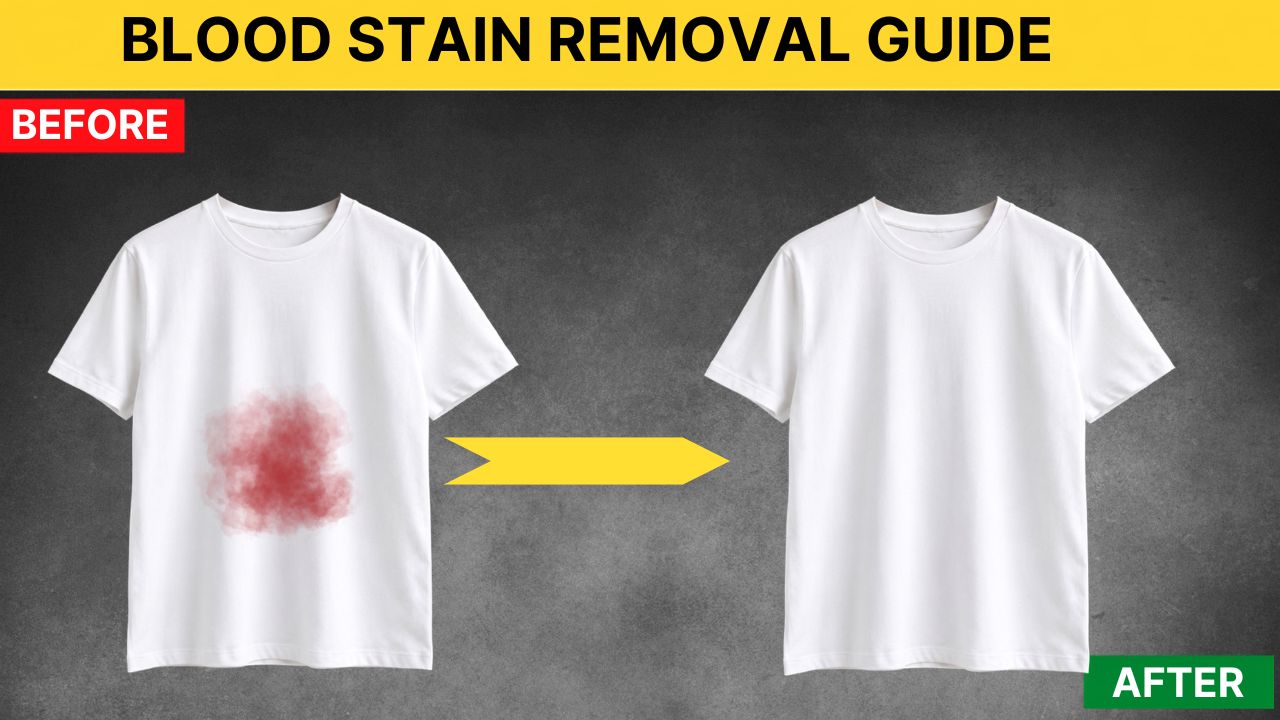
Fresh blood stain marks are much easier to remove than dried ones because blood contains hemoglobin, red blood cells, and blood protein that quickly bind to fabric fibers, turning them into a stubborn protein stain. From my experience, the safest approach is to begin the stain removal process with cold water, since hot water can permanently set an organic stain. Start with a simple pre-treatment by rinsing the fabric thoroughly, then apply an enzyme-based laundry detergent or a quality laundry detergent directly to the stain and let it work for several minutes. If traces remain, use hydrogen peroxide on color-safe fabrics or oxygen bleach according to the fabric care label. Gentle alternatives like baking soda, white vinegar, or a dedicated stain remover can also help depending on the fabric. After treating the stain, wash the garment in the washing machine using the recommended cycle for materials such as cotton, polyester, or denim, while delicate fabrics like silk and wool should be handled with extra care. Finally, allow the clothing to dry by air drying instead of using a clothes dryer until you are certain the stain has completely disappeared, as heat can make any remaining residue much harder to remove.
What’s the Best Way to Remove Blood Stains from Clothes?
The best way to remove a blood stain is to start with cold water as soon as possible because it prevents the blood protein from bonding tightly to fabric fibers. I’ve found that a quick pre-treatment with an enzyme-based laundry detergent usually delivers the best results, although a regular laundry detergent or a reliable stain remover can also work well on lighter stains. After letting the cleaner sit for several minutes, wash the garment in the washing machine according to the instructions on the fabric care label, then inspect the stain before air drying, since drying with heat too early can make any remaining stain much more difficult to remove.
Why Are Blood Stains So Hard to Remove?
Blood is one of the toughest household stains because it contains hemoglobin, red blood cells, blood protein, and iron, all of which interact quickly with fabric fibers. As the stain sits, natural coagulation begins, while oxidation darkens the color and makes the residue cling more tightly to the fabric. In my experience, this combination transforms a simple spill into a stubborn protein stain, especially once heat triggers protein denaturation, making the stain far more difficult to lift.
Fresh Blood vs Dried Blood Stains
The difference between fresh blood and dried blood is mainly time and moisture. Fresh stains still contain moisture, so the blood protein has not fully bonded with the fabric fibers, making stain removal much easier. Once a blood clot forms and the fabric has time for complete absorption, the stain becomes more deeply embedded and usually requires stronger cleaning methods and a little more patience.
Why Hot Water Makes Blood Stains Permanent
Using hot water is one of the biggest mistakes when treating blood because the heat causes protein denaturation, changing the structure of hemoglobin and other blood protein components. As a result, these proteins bind more firmly to fabric fibers, leading to stain setting instead of stain removal. I always recommend rinsing with cold water first, as it helps keep the proteins from setting and gives you a much better chance of removing the stain completely.
Things You’ll Need
Before treating a blood stain, gather a few basic supplies to make the process easier and more effective. I usually keep cold water, an enzyme detergent, regular laundry detergent, hydrogen peroxide, baking soda, white vinegar, and oxygen bleach on hand because different fabrics and stain ages often require different solutions. A soft-bristle brush helps loosen residue without damaging the fabric, while a microfiber cloth or clean cloth is useful for blotting instead of rubbing. To mix or apply cleaning solutions accurately, you’ll also need a spray bottle and a measuring spoon.
How to Remove Fresh Blood Stains from Clothes
Fresh blood stain marks are much easier to remove if you treat them immediately before they settle into the fabric fibers. From my experience, following a simple step-by-step method prevents permanent staining and often eliminates the need for harsh chemicals. Always check the garment’s care label before you begin so you choose the safest cleaning method.
Step 1: Blot the Excess Blood
Start by placing a paper towel or clean cloth over the blood and use gentle blotting instead of rubbing. This lifts as much liquid as possible and improves stain removal without pushing the stain deeper into the fabric.
Step 2: Rinse with Cold Water
Hold the stained area under cold running water in the sink, allowing the water pressure to flush the stain from the back of the fabric. This helps remove blood before it binds tightly to the fabric fibers, making later cleaning much easier.
Step 3: Apply Enzyme-Based Detergent
Apply an enzyme detergent or liquid laundry detergent directly to the stain as a pre-treatment. Products containing a protease enzyme are especially effective because they break down blood proteins naturally. If needed, follow up with a quality stain remover for stubborn spots before washing.
Step 4: Gently Rub the Fabric
Use a soft brush or an old toothbrush to work the cleaner into the fabric fibers with gentle scrubbing. I prefer using light circular motions because they loosen the stain without causing unnecessary wear to the material.
Step 5: Wash According to the Care Label
Place the garment in the washing machine and select a cold wash cycle with your regular laundry detergent. Following the instructions on the fabric care label helps protect the fabric while ensuring the remaining stain is thoroughly cleaned.
Step 6: Air Dry and Inspect the Stain
After washing, choose air drying instead of using a clothes dryer. If possible, inspect the garment in natural sunlight because it makes stain inspection easier. Only use the dryer once you’re certain the stain has completely disappeared, as heat can permanently set any remaining residue.
How to Remove Dried Blood Stains
A dried blood stain usually requires more patience because the blood protein has already bonded with the fabric through oxidation. In my experience, the most effective approach is to start with soaking the garment before using stronger cleaning agents. After soaking, apply an enzyme stain remover or work a small amount of laundry detergent into the stain to begin breaking it down.
Soak Before Washing
Fill a basin with cold water and allow the garment to sit for adequate soaking time so the stain can soften. Adding a little laundry detergent to the water helps with stain loosening, making it easier to remove the remaining residue during washing.
Use Hydrogen Peroxide Carefully
For washable, light-colored items, hydrogen peroxide can be highly effective because its mild oxidation action helps lift old blood stains. I only recommend using it on white fabric or after testing for colorfastness on a hidden area, as this simple step reduces the risk of discoloration while improving stain removal. If needed, oxygen bleach is another safe option for many colorfast fabrics when used according to the product instructions.
Repeat if Necessary
If any trace of the stain remains after washing, repeat the pre-treatment, run another washing cycle, and perform a careful stain inspection before drying. Taking a little extra time is often far more effective than exposing the garment to heat too soon.
Best Blood Stain Removal Methods Compared
No single method works for every blood stain, so choosing the right treatment depends on the fabric and how long the stain has been there. From my experience, cold water should always be the first step, followed by an enzyme detergent for fresh stains because it breaks down blood proteins effectively. For older stains, hydrogen peroxide or oxygen bleach often delivers better results on color-safe fabrics, while baking soda and white vinegar are useful household alternatives for light stains. A small amount of dish soap can help lift greasy residue mixed with blood, and a commercial stain remover is a reliable option when home remedies are not enough.
How to Remove Blood Stains from Different Fabrics
Removing blood stains successfully depends on the type of fabric you’re treating. I always recommend checking the fabric care label first because materials such as natural fiber and synthetic fiber react differently to cleaning products. When possible, test any treatment on a hidden area, especially if you’re working with colorfast fabric or garments with delicate dyes.
Cotton
Cotton is made from cellulose fiber, making it durable enough for most stain treatments. Rinsing with cold water and applying an enzyme detergent usually removes fresh blood stains effectively without damaging the fabric.
White Clothes
For white fabric, I often use hydrogen peroxide because it helps break down blood stains while preserving brightness. If additional cleaning is needed, oxygen bleach is another reliable option for washable cotton garments, provided you follow the product instructions.
Colored Clothes
With colored fabric, protecting the original dye is just as important as removing the stain. Always test for colorfastness, rinse with cold water, and choose a color-safe bleach instead of regular chlorine bleach to reduce the risk of fading.
Jeans
Because denim is a tightly woven cotton twill, blood stains can settle deep into the fabric. In my experience, treating the area with an enzyme detergent after flushing it with cold water provides the best chance of lifting the stain without affecting the material.
Polyester
Polyester is a durable synthetic fiber that usually releases blood stains more easily than natural fabrics. A quality stain remover followed by a rinse with cold water is often enough to restore the garment without extra scrubbing.
Delicate Fabrics (Silk & Wool)
Both silk and wool are protein fiber materials, so they require extra care during stain removal. For any delicate fabric, I recommend using a gentle detergent and hand washing instead of machine washing to minimize damage while safely removing the stain.
| Method | Best For | Safe On | Effectiveness |
| Cold Water | Fresh blood stains | All washable fabrics | ⭐⭐⭐⭐⭐ |
| Enzyme Detergent | Fresh & dried blood | Cotton, polyester, denim | ⭐⭐⭐⭐⭐ |
| Hydrogen Peroxide | White fabrics, old stains | White/colorfast fabrics | ⭐⭐⭐⭐☆ |
| Oxygen Bleach | Set-in stains | Color-safe fabrics | ⭐⭐⭐⭐☆ |
| Baking Soda Paste | Light stains | Most fabrics | ⭐⭐⭐☆☆ |
| White Vinegar | Fresh stains | Most washable fabrics | ⭐⭐⭐☆☆ |
| Dish Soap | Blood mixed with grease | Most fabrics | ⭐⭐⭐☆☆ |
| Commercial Stain Remover | Tough stains | As per care label | ⭐⭐⭐⭐⭐ |
Natural Ways to Remove Blood Stains
If you prefer household remedies, several natural ingredients can help remove fresh blood stains without relying on commercial products. In my experience, these methods work best when paired with cold water, especially before the stain has fully set. Common options include baking soda (sodium bicarbonate), white vinegar (acetic acid), salt (sodium chloride), lemon juice, and cornstarch, each offering a different way to loosen or absorb the stain.
Baking Soda Paste
Mix baking soda with a small amount of water to create a thick stain paste. Since sodium bicarbonate has mild cleaning properties, I usually let the paste sit for 15–30 minutes before gently rinsing it away with cold water.
White Vinegar
Apply white vinegar directly to the stain or dilute it slightly if needed. The acetic acid helps loosen dried residue, and a final rinse with cold water supports effective stain removal without exposing the fabric to heat.
Salt Solution
Dissolve salt (sodium chloride) in cold water and soak the stained area for a short period. This simple soaking method can help lift fresh blood from fabric before it becomes more difficult to remove.
Common Mistakes to Avoid
One of the biggest mistakes I see is using hot water, which causes stain setting and makes blood much harder to remove. Avoid putting stained clothing in a clothes dryer until you’re sure the stain is gone, and never use chlorine bleach on fabrics unless the fabric care label specifically allows it. For colored garments, choose color-safe bleach instead, and resist aggressive rubbing, as it can damage the fabric while forcing the stain deeper into the fibers.
Can You Remove Old Blood Stains Completely?
An old blood stain can often be removed, but success depends on how deeply the protein stain has bonded through oxidation. I usually start with an enzyme cleaner, then use hydrogen peroxide on suitable fabrics if needed. When the stain has penetrated deeply into the fabric fibers or the garment is especially valuable, professional dry cleaning is often the safest and most effective option.
Tips to Prevent Blood Stains from Setting
The best way to prevent permanent stains is to rinse the fabric with cold water immediately and apply a pre-treatment using laundry detergent or a quality stain remover. Always follow the fabric care label, wash the garment in the washing machine using the recommended cycle, and choose air drying until you’ve confirmed the stain has completely disappeared.
Frequently Asked Questions
How do you get dried blood stains out of clothes?
To remove a dried blood stain, start by soaking the garment in cold water to soften the blood protein. Next, apply an enzyme-based laundry detergent or an enzyme stain remover as a pre-treatment, then wash with laundry detergent according to the fabric care label. If the stain remains, use hydrogen peroxide or oxygen bleach on suitable fabrics before air drying.
Can toothpaste remove blood stains?
Toothpaste is not the best choice for blood stain removal because it is not designed to break down blood protein. An enzyme-based laundry detergent, a dedicated stain remover, or hydrogen peroxide will usually provide much better results while being safer for most washable fabrics.
Can vinegar remove blood stains?
Yes, white vinegar can help remove light or fresh blood stains because its mild acidity loosens the stain from fabric fibers. For the best results, rinse with cold water first, apply the vinegar for a few minutes, then wash with laundry detergent. Tough or dried stains may still require an enzyme detergent or oxygen bleach.
Does dried blood stain permanently?
A dried blood stain is not always permanent, but it becomes harder to remove as oxidation causes the blood protein to bond tightly with fabric fibers. Prompt pre-treatment, the right cleaning products, and avoiding hot water or a clothes dryer before the stain is gone can significantly improve your chances of complete removal.
What is the best old blood stain remover?
For an old protein stain, an enzyme-based laundry detergent or enzyme cleaner is usually the most effective option because it breaks down dried blood protein. If the fabric allows, hydrogen peroxide or oxygen bleach can provide additional stain-lifting power. Always check the fabric care label before treatment and inspect the garment before air drying.
Final Thoughts
Removing blood stains from clothes is much easier when you act quickly, use cold water, choose the right cleaning method for the fabric, and avoid common mistakes like using heat too soon. Whether you’re dealing with a fresh spill or a dried stain, following the correct pre-treatment and washing steps can help restore your clothing without causing damage. If you’re looking to tackle other tough stains, you may also find our guides on how to remove grease stains from clothes and how to remove wine stains from clothes helpful, as they cover proven techniques for different types of fabric and stain removal challenges.